
Emergency Plumbing in Los Angeles: What Counts as an Emergency, and What to Do First
Los Angeles Plumbing Pros Blog — 30 Oct 2026
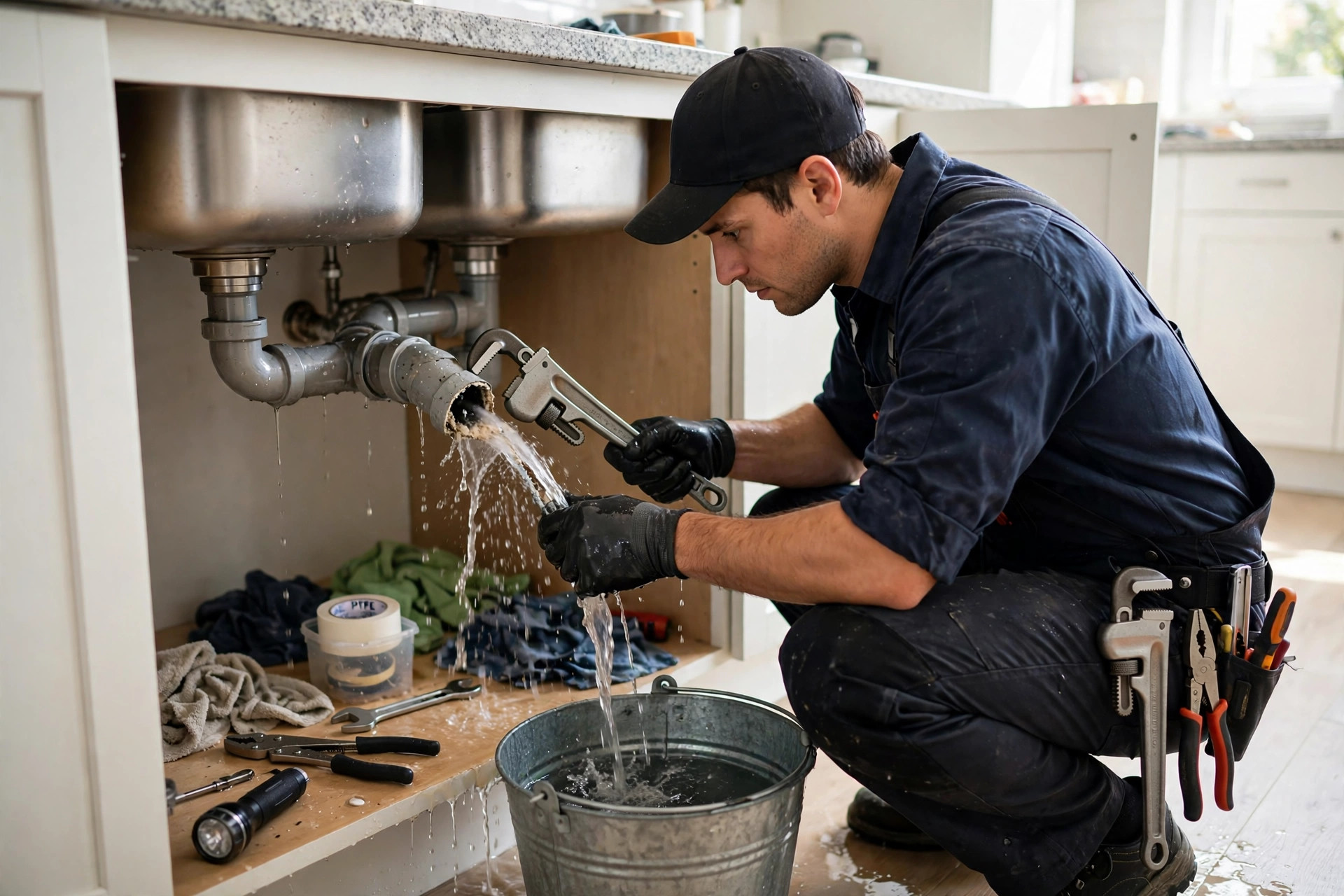
A plumbing emergency in Los Angeles rarely announces itself politely. It arrives as water spreading across a kitchen floor in Silver Lake, a ceiling stain growing darker over a living room in Pasadena, a toilet backing up the night before guests arrive in Long Beach, or a sudden loss of water pressure across a whole house in the San Fernando Valley. The first minutes matter, not because every leak needs panic, but because the right first steps can limit damage, protect flooring and framing, and give a plumber a clear picture when help arrives.
Los Angeles homes make emergencies harder to read than they first appear. A city built across hillsides, flatlands, coastal flats and older inland neighbourhoods contains houses from very different eras, plumbed with very different materials, sitting on soil that ranges from stable fill to expansive clay. A leak in a 1920s Craftsman with a crawlspace behaves differently from a leak in a Torrance slab home, where pipes run beneath concrete and the first sign may be a warm spot on the floor or an unexplained rise in a water bill. Winter rain, hillside pressure and old galvanized pipe all add their own complications.
This guide explains what genuinely counts as a plumbing emergency in Los Angeles, what to do in the first minutes for each common type, how a diagnosis usually proceeds, and what repair choices look like once the water is under control. It is written for homeowners and renters who need to act calmly, protect the home, and avoid making a small failure worse while waiting for help.
How emergency plumbing works in Los Angeles homes
Emergency plumbing starts with stopping the water, not with fixing the pipe. In most Los Angeles houses the main shut-off is near the front of the property, often by the hose bibb, in a garage wall box, or at the meter near the street, and every adult in the home should know where it is before an emergency happens. Turning that valve clockwise usually stops supply to the whole house, while individual fixture stops under a sink or behind a toilet can isolate one problem without cutting water to every room. Knowing the difference saves a night without water when only one toilet supply line has failed.
Once supply is controlled, the next job is to limit damage and gather information. Mopping, towels and buckets help, but so does noting where water first appeared, whether it is clean or sewage, whether the water meter is still spinning with everything off, and whether hot water, cold water or both are affected. A plumber can work much faster with those details than with a vague report of water somewhere downstairs. Photographs of the meter, the stain, the appliance connections and any visible pipe help too, especially when the leak is hidden inside a wall or under a slab.
In Los Angeles, emergency work often involves more than the failed part itself. A burst in a hillside home may be tied to pressure above 80 PSI, which stresses supply lines, angle stops, washing-machine hoses and water-heater connections. A slab leak in Torrance may require electronic listening or thermal imaging to locate before any concrete is opened. A sewer backup after winter rain may need a camera inspection to show whether roots, a collapsed clay section or a city-side problem is involved. A good emergency visit therefore has two phases: make it safe and dry, then diagnose the cause before committing to a permanent repair.
Los Angeles causes and housing types behind emergencies
Age is the single most useful clue in Los Angeles plumbing. Many homes built between 1948 and 1965 still contain galvanized steel supply pipe, which corrodes from the inside over decades. The bore narrows, pressure at fixtures falls, rust colours the water, and eventually a weakened section splits or a threaded joint gives way. A house that has had gradually worsening pressure for years and then suffers a sudden burst has often been warning its owner for a long time, in the form of brown water after a shut-off, noisy pipes, or fixtures that run slowly even when neighbours have normal pressure.
Housing type changes where an emergency shows up. Craftsman homes and other raised-foundation houses in neighbourhoods such as Highland Park, Eagle Rock and parts of Pasadena often have crawlspaces where a leak can run for days before it stains a floor, showing first as damp soil, a musty smell, or sagging insulation. Slab-on-grade homes, common in Torrance and much of the post-war South Bay and Valley, hide supply and sewer lines beneath concrete, so a supply leak may surface as a warm floor patch, a sound of running water when nothing is on, or a damp baseboard with no obvious source above it.
Hillside homes add pressure and movement to the picture. Water pressure at the bottom of a steep street can exceed 80 PSI, and without a working pressure-reducing valve that force works on every joint, hose and appliance valve in the house, day and night. Seismic movement, even small shifts over time, can stress rigid connections at water heaters, where flexible connectors, bracing and shut-offs matter. Coastal homes face a different mix: salt air corrodes exposed fittings, older cast-iron drains corrode from the inside, and high groundwater after rain can push into low drains and older sewer laterals.
Signs by room and area: what each emergency looks like
In a kitchen, an emergency often starts at the sink supply lines, the dishwasher connection or the refrigerator water line. A slow drip under a sink that suddenly becomes a spray usually points to a failed supply hose, a cracked angle stop or a loose compression fitting, and the fastest response is the local stop under that sink, followed by towels and a check of the cabinet floor and the room below. A dishwasher leak may instead appear at the front of the machine or from the cabinet next door, because water travels along flooring and under cabinets before it becomes visible.
Bathrooms concentrate risk in a small area. A toilet supply line or fill valve failure can flood a bathroom quickly, while a wax-ring failure shows more slowly as water around the toilet base, a soft floor, or a stain on the ceiling below. A shower or tub leak may never appear in the bathroom itself, instead staining the ceiling of the room beneath or warping a hallway wall. Hot water on a floor, a toilet that keeps running after a flush, or a sudden drop in shower pressure while other fixtures stay normal all point to different causes, and noting which fixtures are affected helps narrow the search.
Garages, laundry rooms and water-heater closets deserve special attention because they hold the appliances most likely to fail suddenly. A washing-machine hose, especially an older rubber hose, can split and release a large volume of water in minutes, which is why the laundry shut-offs and a drain pan matter. A water heater failure may show as water at the base of the tank, rust streaks, a hissing relief valve discharge, or no hot water at all. In a garage, water may pool near a wall and look like a car or condensation problem, so checking the heater, softener connections and any exposed pipe along that wall is worth doing before assuming the source is outside.
Diagnosis steps: how the cause is found
Diagnosis begins with isolation. A technician will usually check whether the problem is supply-side or drain-side, hot or cold, one fixture or the whole house, and whether the meter moves with all fixtures off. That simple meter test separates a hidden supply leak from a drain or condensation problem, and it costs nothing but a few minutes. From there, the search follows the pipe run: visible pipe in a garage or crawlspace, fixture connections, appliance hoses, and the water heater, before moving to hidden areas.
For hidden leaks, listening equipment, thermal cameras and moisture meters help locate water without opening every wall. Acoustic listening can pick up the hiss of a pressurised leak under a slab or behind plaster, while a thermal camera shows temperature differences where hot-water lines run. Moisture readings map how far water has travelled, which matters because the wettest visible spot is not always the leak itself. Water follows framing, pipes and slopes, so a stain two rooms away from the source is common in Los Angeles homes with long horizontal runs.
Sewer and drain emergencies need a different toolset. A camera inspection through a cleanout shows roots, offsets, cracks, bellies where water pools, and collapsed sections in clay or cast-iron laterals, and it records how far from the access point each problem sits. That distance matters for repair planning and for deciding whether a spot repair, a trenchless lining or a full replacement makes sense. After winter rain, a camera can also show whether a lateral is taking in groundwater through cracks, which explains backups that only appear during storms.
Repair and replacement options, and their trade-offs
For a burst supply pipe, the immediate repair is usually a cut-out and replacement of the damaged section, using copper or PEX depending on the existing system, access and local conditions. Copper resists heat and rodents and matches many older Los Angeles systems, while PEX is flexible, handles freeze and movement well, and can be routed through tight crawlspaces with fewer joints. The trade-off is not only material cost but access: opening a wall in a Craftsman is different from cutting a slab in Torrance, and the least destructive route that still gives a durable joint is usually the right one.
A failed angle stop, supply hose or appliance connection is a smaller job with an outsized lesson. Replacing a single rubber washing-machine hose with a braided stainless hose, or a seized angle stop with a quarter-turn ball valve, reduces the chance of a repeat flood for a modest change. Replacing all hoses and stops of the same age at once is worth discussing when one has already failed, because hoses and valves installed together tend to age together, and the cost of a second flood dwarfs the cost of preventive replacement.
Water-heater emergencies present a repair-or-replace choice. A failed relief valve, thermostat or element can be repaired, but a leaking tank cannot be patched reliably, and a tank with heavy scale in a hard-water area may be near the end of its useful life even if the immediate leak is elsewhere. Age, scale, rust at the base, and whether the heater has seismic bracing and a working pressure valve all feed into that decision. Replacing a heater during an emergency visit is sometimes the practical choice, but it should never be rushed without confirming size, venting, gas or electric supply, and drain arrangements.
What to check before calling
Before calling, find and operate the right shut-off if it is safe to do so. For a single fixture, use its local stop. For a burst pipe, a slab leak or water you cannot trace, use the main shut-off. Do not reach into standing water near electrical outlets, a water heater or a breaker panel, and do not enter a crawlspace with standing water or sewage. If sewage is involved, keep children and pets away, avoid using other drains and toilets, and note which fixtures back up first, because that sequence helps locate the blockage.
Gather a short set of facts while the situation is fresh. Note when the problem started, whether it followed rain, a shut-off, a new appliance or a change in pressure, and whether hot water, cold water or drains are affected. Check the water meter if you can do so safely, and note whether it moves with everything off. Look for the age of the water heater, any recent plumbing work, and whether neighbours have similar problems, because a street-wide pressure surge or a city-side sewer issue changes the response. This information shortens the visit and reduces guesswork.
Protect what can be protected without delaying the call. Move rugs, boxes and electronics away from water, lift furniture legs onto blocks if water is spreading, and open a path to the problem area, the shut-off and the water heater so a technician is not delayed by clearing a garage or closet on arrival. If water has reached drywall, do not cut large openings yourself unless you are confident about wiring and framing, because a controlled inspection preserves evidence of the leak path and avoids turning a repair into a larger rebuild. Photographs before cleanup are useful, even if the room looks worse in the picture than it feels in person.
Prevention and maintenance for Los Angeles conditions
Prevention in Los Angeles is largely about pressure, material age and trees. A pressure-reducing valve should be checked so that household pressure stays below the level that stresses joints and hoses, particularly in hillside areas where street pressure can exceed 80 PSI. Testing that valve, exercising main and fixture shut-offs once or twice a year, and replacing rubber washing-machine hoses on a schedule all reduce the chance that a small component becomes a flood. These are quiet tasks, but they are the difference between a valve that closes in an emergency and one that snaps or leaks.
Hard water maintenance matters for emergency prevention too. Flushing a water heater annually removes sediment that causes rumbling, overheating and premature tank failure in water measuring 200 to 400-plus parts per million, and descaling a tankless unit protects its heat exchanger. Checking anode rods, relief valves and expansion arrangements during that visit catches failures before they become leaks. In homes with galvanized supply pipe from 1948 to 1965, a gradual repipe plan, done section by section or in one project, is often more economical than repeated emergency calls to successive weak joints.
Roots and winter rain need their own seasonal attention. Oak, sycamore and pepper trees send roots toward moisture in clay and cast-iron laterals, entering through joints and small cracks, so a camera inspection every few years for a home with mature trees near the sewer line is a practical safeguard, not an extravagance. Before winter rain, clearing gutters and area drains, checking that cleanouts are accessible, and addressing a slow drain rather than ignoring it can prevent a storm-night backup. A drain that gurgles in October is giving a warning that January rain will test.
City-by-city notes across Los Angeles
In the hillside neighbourhoods of Los Angeles proper, including Silver Lake, Los Feliz and the Hollywood Hills, pressure and access dominate emergency work. Steep streets create high pressure at lower homes, older houses mix galvanized, copper and newer materials across remodels, and narrow access can slow equipment movement. A leak here often requires tracing through multiple remodel layers, where a bathroom added in one decade connects to a supply run from another, and the original shut-off may be buried behind a later addition.
Pasadena and Glendale combine older housing stock with very hard water. Craftsman homes with crawlspaces, early twentieth-century bungalows and post-war houses sit side by side, and hardness at the high end of the Los Angeles range accelerates scale in heaters and fixtures. Glendale homes in particular often show the pairing of hard water and aging galvanized pipe, so an emergency visit there should include a check of both the failed joint and the general condition of the supply system, rather than treating the burst as an isolated event.
Torrance, Long Beach and the coastal flats bring slab construction, older cast-iron drains and high groundwater into focus. Slab leaks are a recurring theme in Torrance, where locating a leak precisely before cutting concrete saves both floor and money. Long Beach homes range from historic Craftsman houses to mid-century apartments, so a single street can contain crawlspace leaks, slab leaks and shared drain problems in multi-unit buildings, each needing a different approach. Santa Monica and the Westside add salt-air corrosion on exposed fittings and older apartment plumbing, where one failure can affect several units and shut-off coordination matters.
Frequently asked questions
What should I do first if a pipe bursts in my Los Angeles home?
Turn off water at the fixture stop if the source is one fixture, or at the main shut-off if the source is unclear or widespread. Keep clear of water near electrics, note whether the water is clean or sewage, and call for help with the location, the fixture affected, and whether the meter moves with everything off.
Is a slow drain or a single gurgling toilet an emergency?
A single slow drain is usually not an emergency on its own, but multiple drains backing up at once, sewage at a floor drain, or a toilet that overflows when another fixture drains should be treated urgently, because they can indicate a main-line blockage that will worsen quickly.
Why does my Torrance slab home keep having hidden leaks?
Slab homes run pipes beneath concrete, so small supply leaks have nowhere visible to go until they warm a floor patch, dampen a baseboard, or raise a water bill. Pressure, aging pipe material and soil movement all contribute, and precise leak location before cutting concrete is essential.
Does high hillside pressure really cause emergencies?
Yes. Pressure above 80 PSI stresses every joint, hose and valve in a home continuously, so a hillside house without a working pressure-reducing valve is more likely to suffer burst hoses, failed angle stops and water-heater connection leaks than a similar home at normal pressure.
Related service
Call Los Angeles Plumbing Pros
If you are seeing the signs in this post, describe what you see, where it is, and when it started. A technician will talk through the next step before any work starts.