
Gas Line Services in Los Angeles: Safety, Seismic Protection, and When to Call
Los Angeles Plumbing Pros Blog — 30 Oct 2026
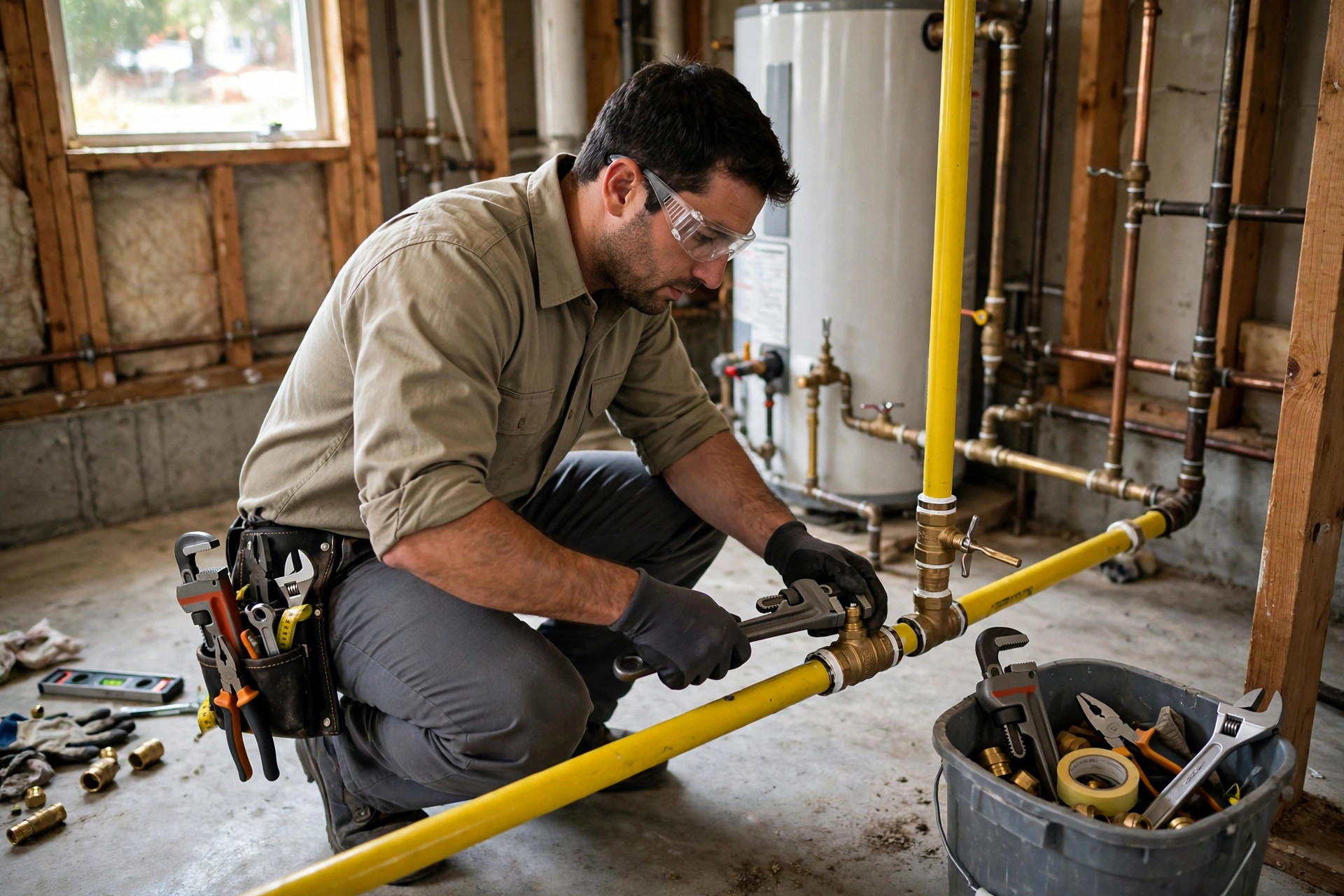
Gas lines are the part of a home's plumbing that most homeowners never think about until something smells wrong, an appliance stops working, or a remodel reveals ageing pipe. Unlike a water leak, which damages property, a gas leak can endanger people, which is why gas line work in Los Angeles carries a different level of caution and a different decision process. This guide explains gas line services in Los Angeles terms: how residential gas lines are laid out, why seismic safety matters so much here, what warning signs demand immediate action, and how routine gas line work, from appliance connections to earthquake shutoff valves, is planned and carried out safely.
Los Angeles adds specific factors to gas line work. Earthquakes can shift pipes and loosen connections, older homes may have gas lines sized for a different set of appliances than they now serve, and remodels often add a high-demand appliance, such as a tankless water heater, range, or dryer, without checking whether the existing gas system can supply it alongside everything else. Hillside homes, Craftsman crawlspaces, Torrance slab homes, and multi-story buildings each present different routing and access questions. This guide does not turn a homeowner into a gas fitter, and it should not: gas work is not a do-it-yourself project. Its purpose is to help you recognise danger, understand what professional gas line services involve, and make informed decisions about seismic protection and upgrades.
How a residential gas line system works in a Los Angeles home
Natural gas enters a Los Angeles home through a meter, usually outside, and then travels through a network of rigid pipe, with branches to each gas appliance: the water heater, furnace, stove or range, dryer, fireplace, and sometimes a pool heater or outdoor grill connection. Each branch typically has its own shutoff valve near the appliance, and the main shutoff at the meter controls the whole house. Pipe sizing matters throughout this network, because gas, like water, loses pressure as it travels through pipe, and a system must deliver enough gas at sufficient pressure to every appliance running at the same time. A line sized for a small set of older appliances may struggle when a larger range, a tankless heater, and a furnace all draw together.
The materials and joints in a gas system are chosen for gas service, not for water, and they must remain sealed and supported over decades of minor building movement, temperature change, and, in Los Angeles, seismic activity. Corrosion, loose fittings, damaged flexible connectors, and unprotected pipe in crawlspaces or garages can all compromise that seal. Unlike water pipe, where a small leak shows as dampness, a gas leak may show only as a smell, a hissing sound, a dying plant near an outdoor line, or an appliance that behaves oddly.
Seismic safety: why Los Angeles gas lines need earthquake thinking
Earthquakes are the defining seismic risk for Los Angeles gas systems. Shaking can shift a water heater, strain a rigid gas connection, crack a brittle joint, or move a house slightly on its foundation, and any of those movements can open a gas leak where none existed before. That is why seismic strapping for water heaters matters so much: a heater that topples or slides can shear its gas line, turning an earthquake into a gas emergency as well. Flexible connectors, properly supported pipe, and secure appliance connections help a gas system ride out shaking without breaking, though no installation can guarantee immunity from a major quake, and post-earthquake checks remain essential.
Earthquake shutoff valves are a central part of seismic gas safety in Los Angeles. These valves are designed to stop gas flow to the house when shaking reaches a threshold, reducing the chance that a broken downstream line continues to feed gas into a damaged home. They are not a substitute for sound pipe, strapping, and post-quake inspection, and they must be suited to the home's meter and gas load, installed correctly, and understood by the household, including how to recognise that the valve has tripped and how gas is safely restored. A home with a shutoff valve, strapped appliances, and a household that knows where the main shutoff is and when not to touch it is far safer than a home relying on any single device alone.
Warning signs that need immediate action, and signs that need prompt attention
A gas smell is the warning sign that overrides all others. Natural gas is given a distinctive rotten-egg odour precisely so leaks can be smelled, and any strong or persistent smell, especially near an appliance, meter, or crawlspace, should be treated as an emergency. If you smell gas strongly, do not switch lights or appliances on or off, do not use a phone inside the affected area, do not try to find the leak with a flame, and leave the building, moving to a safe distance before calling for emergency help. A hissing sound near a gas line or meter, a sudden dead patch of vegetation over a buried outdoor line, or a meter that appears damaged after an earthquake or impact are also urgent signs that should not wait for a routine appointment.
Less urgent but still prompt signs include appliances with yellow, lazy, or sooty flames where blue flames are expected, soot around a burner or vent, a pilot that repeatedly goes out, or an appliance that suddenly performs poorly. These can point to gas supply, venting, or combustion problems that need professional diagnosis, not adjustment by trial and error. A faint, intermittent smell that comes and goes should still be checked promptly, because a small leak can worsen, and because a smell that seems to vanish may simply be ventilated away temporarily. When in doubt, treat a gas concern as urgent and let a professional judge it, rather than waiting to see whether it gets worse.
How gas line diagnosis and leak detection work
Professional gas line diagnosis starts with safety and isolation, not with guesswork. A technician will ask when the smell or symptom appeared, which appliances are affected, whether any work, earthquake, or impact preceded it, and whether the smell is stronger in a particular room or near a particular appliance. Testing typically involves pressurising or isolating sections of the system and using detection equipment to find where pressure drops or gas is escaping, working section by section from the meter inward. That sectional approach matters, because a house-wide smell does not prove a house-wide failure, and replacing a whole system for a single faulty connector wastes effort and misses the discipline of finding the actual leak.
Diagnosis also covers the appliances themselves, because a gas problem at one appliance can mimic a line problem, and a line problem can affect several appliances at once. Burner condition, venting, flexible connector age and condition, and shutoff valve function are all checked, along with pipe condition in accessible areas such as garages, crawlspaces, and utility rooms. In Craftsman homes, crawlspace pipe runs and appliance connections below the floor deserve particular attention, while in Torrance slab homes, gas lines routed through or under slabs present different access questions. A thorough diagnosis names the failed section, its cause, and whether the rest of the system is sound, so the repair plan is precise rather than speculative.
Gas line repair, replacement, and appliance connection work
Gas line repair focuses on the failed section and its cause. A corroded section, a damaged connector, a loose joint, or a line stressed by movement may each need a different repair, and the repair must use materials and methods suited to gas service, with joints tested before the system returns to service. Simply tightening a fitting without finding why it loosened, or patching a corroded section without checking neighbouring pipe, risks a repeat failure. After any repair, the system should be tested for leaks, appliances should be checked for correct operation, and the household should be told what was done and what to watch for, because a gas repair that leaves the owner uninformed is incomplete.
Replacement is appropriate when the system as a whole is ageing, corroded, undersized, or damaged in multiple places, or when a remodel changes the gas load beyond what the old system can supply. A full or partial replacement replans pipe sizing for the current and planned appliance load, routes pipe through accessible, protected paths, and renews shutoffs and connectors as needed. Appliance connections are part of this work: a new range, dryer, tankless water heater, or fireplace needs a correctly sized branch, a sound connector, a working shutoff, and proper venting, and adding a high-demand appliance without checking total load is a common cause of appliances that starve each other for gas. A replacement plan should therefore list every appliance the system must serve, now and after the remodel, not just the one being added.
Adding appliances and upsizing gas lines in remodels
Remodels are the most common moment when gas capacity becomes a problem. A kitchen remodel that adds a large professional-style range, a laundry move that adds a gas dryer, or a water heater upgrade to tankless can each raise gas demand substantially, and the existing main and branch lines may not have spare capacity for that increase alongside the furnace and other appliances. The symptom is often subtle at first: a tankless heater that fluctuates when the range is on, a furnace that struggles when several appliances run, or burners that weaken under simultaneous use. These symptoms are sometimes blamed on the new appliance, when the real cause is a gas system that was never upsized for it.
Upsizing involves checking the meter's capacity, the main line size and length, each branch, and the total connected load, then replacing the sections that limit flow. That work must be coordinated with the remodel sequence, because gas lines are far easier to route before walls close and finishes are completed than after. Venting, clearance, and seismic protection for the new appliance must be planned at the same time, and the system must be tested with multiple appliances running, not just the new one alone. A remodel gas plan that checks load, meter, and routing before walls close saves the household from the frustrating discovery, after the remodel is finished, that the beautiful new range and the new water heater cannot perform well together.
What to check before you call, and what never to do yourself
Before calling about a non-emergency gas concern, note which appliances are affected, when the symptom appears, and whether it changes when other appliances run. Note any recent work, earthquake, or impact, the age of flexible connectors if visible and safe to observe, and whether flames look different from usual. Note the location of the meter and main shutoff, and whether anyone in the household knows how to operate it, because that knowledge matters in an emergency. Do not attempt to repair, tighten, or replace gas pipe or connectors yourself, do not use a flame to search for a leak, and do not ignore a smell because it seems faint. Gas work requires training, testing equipment, and knowledge of gas-specific materials and methods that a homeowner should not improvise.
If you smell gas strongly, leave first and call from safety, as described earlier, and do not re-enter to open windows, switch off appliances, or investigate. If a gas appliance shows soot, yellow flames, or repeated pilot failure, stop using that appliance and seek professional advice rather than adjusting it repeatedly. Keep the area around the meter and appliance shutoffs accessible, not blocked by storage, so that shutoff is possible quickly if needed. Teach household members where the main shutoff is and that it is for emergencies, not for casual use, and make sure everyone knows that restoring gas after a shutoff or a shutoff valve trip is a professional task, not a matter of simply turning a valve back on without checks.
Prevention, seismic protection, and ongoing gas safety habits
Ongoing gas safety is mostly about inspection, strapping, and awareness rather than frequent intervention. Appliances should be checked periodically for correct flame, venting, and connector condition, and flexible connectors that are old, kinked, damaged, or of an outdated type should be replaced by a professional. Water heaters and other heavy gas appliances should stay seismically strapped, and straps should be checked after earthquakes, remodels, or any work that might have loosened them. An earthquake shutoff valve, where installed, should be understood by the household and checked as part of periodic safety reviews, so that a trip is recognised and gas restoration is handled safely rather than improvised.
Household habits also matter. Never store flammable materials near gas appliances or meters, keep vents and flues clear, and pay attention to changes in appliance behaviour, because a burner that suddenly changes colour or a pilot that newly struggles is information, not a nuisance. After any earthquake, even a moderate one, check for gas smell, look at visible pipe and appliance connections for displacement, and seek professional advice if anything seems off, even if no smell is present. In hillside homes, where ground movement can be greater, and in older homes with long, ageing gas runs, these post-quake checks are especially important. A gas system that is inspected, strapped, and understood is far safer than one that is simply assumed to be fine because it has not yet caused trouble.
City-by-city notes for gas line work in Los Angeles
Older neighbourhoods in Pasadena, Glendale, and central Los Angeles often combine ageing gas pipe, older appliances, and remodel histories that change gas load, so a gas assessment there should map the whole system and its load, not just the appliance in question. Craftsman homes in central Los Angeles bring crawlspace gas runs into focus, where access, support, and connector condition below the floor deserve careful checking. Torrance and Long Beach slab homes raise routing questions for gas lines near or under slabs, and any gas work there must distinguish slab, crawlspace, and overhead routes before a plan is settled.
Hillside homes face greater seismic and ground-movement stress, making strapping, flexible connections where appropriate, and earthquake shutoff protection especially relevant, while larger Valley homes with many gas appliances need load calculations that account for simultaneous use across water heating, cooking, laundry, and heating. Santa Monica and coastal condos often involve building-managed gas systems and shared infrastructure, where individual unit work must respect building rules and common systems. Across all these areas, the message is consistent: gas safety in Los Angeles is seismic safety, load safety, and leak safety together, and a gas plan that addresses all three, for the specific house and neighbourhood, is the one that protects the household best.
After gas work: testing, restoration, and household briefing
Testing after gas work is methodical and should never be rushed. The repaired or replaced section, and the system as a whole where relevant, should be tested for leaks, and each affected appliance should be checked for correct ignition, flame, venting, and operation, ideally with other gas appliances running so that simultaneous load is observed, not just single-appliance performance. Pilots and controls that were shut down during the work should be restored by the professional, not by the homeowner experimenting with valves, and any earthquake shutoff valve that tripped should be reset only as part of that professional check, with the reason for the trip understood first.
The household briefing is the final safety step. Everyone who lives in the home should know where the main shutoff is, what a gas smell means, and that leaving and calling from safety comes before investigating. They should also know what was replaced, where new pipe or connectors run, and what changes to watch for, such as flame colour, soot, or a pilot that newly struggles. Keep a record of the work, the appliances served, and the date, with other home safety documents, so future work or a future emergency does not start from guesswork. A gas job that ends with testing and a clear briefing leaves the household safer than one that ends the moment the flame is lit.
Frequently asked questions
What should I do if I smell gas in my home?
Leave the building without switching lights or appliances on or off, move to a safe distance, and call for emergency help from there. Do not search for the leak with a flame and do not re-enter to investigate. A professional should check and restore the system.
What is an earthquake gas shutoff valve, and do I need one?
It is a valve designed to stop gas flow to the house when shaking reaches a threshold, reducing the risk that a broken line keeps feeding gas after an earthquake. Whether it suits your home depends on your meter, gas load, and system, and it works alongside strapping and sound pipe, not instead of them.
Why does my new tankless heater or range affect other gas appliances?
High-demand appliances draw a large share of the gas system at once. If the main or branch lines and meter were sized for smaller, older appliances, simultaneous use can starve one appliance for gas. A load check before installation usually prevents this.
Can I replace a gas connector or pipe myself?
No. Gas work should be left to trained professionals with proper testing equipment and gas-rated materials. Homeowners should recognise warning signs, know where shutoffs are, and call for help, not attempt repairs themselves.
Related service
Call Los Angeles Plumbing Pros
If you are seeing the signs in this post, describe what you see, where it is, and when it started. A technician will talk through the next step before any work starts.