
Hillside Pressure Over 80 PSI: Why a Pressure-Reducing Valve Matters in Foothill Homes
Los Angeles Plumbing Pros Blog — 30 Oct 2026
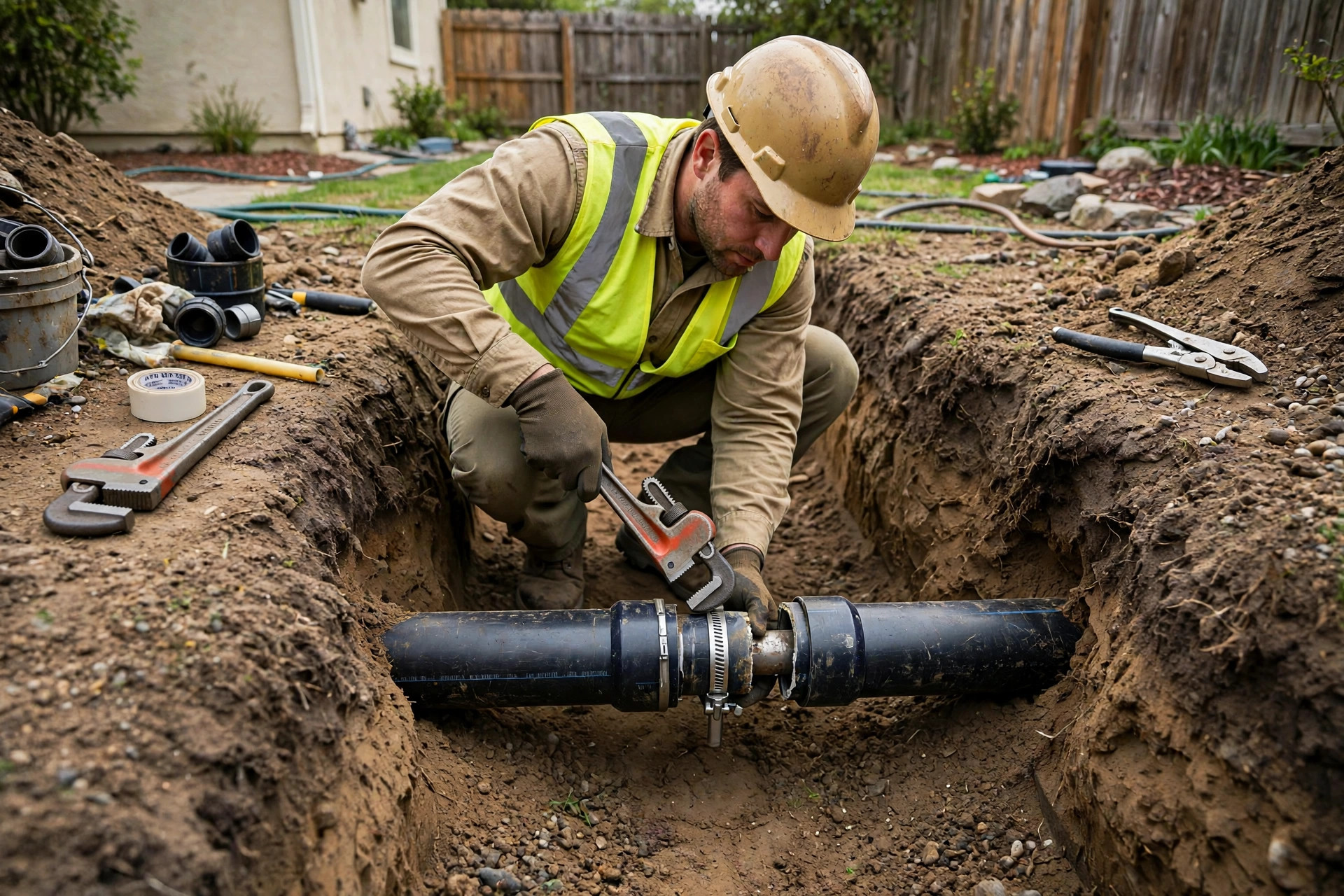
In foothill neighbourhoods, water pressure can climb to 100 or 150 PSI, far above the 80 PSI limit. Fixtures, heaters, and joints all pay for that pressure, quietly, until something fails.
Why foothill pressure runs so high
Water pressure in a home is not set by the house. It is set by elevation and by the water system that serves the street. In foothill neighbourhoods in Pasadena, Glendale, Burbank, and the San Fernando Valley, homes sit well below the reservoir or tank that feeds them, and gravity adds pressure with every foot of drop. A home at the bottom of a hill can easily see 100 to 150 PSI at the meter, while a home a few streets uphill sees far less. That variation is normal for the water system, but it is not normal for the fixtures inside a house, which are designed for a much lower range.
What high pressure does, slowly and then suddenly
High pressure does not usually cause a dramatic burst on the first day. It causes a slow accumulation of stress. Toilet fill valves leak and run, faucet cartridges wear out early, washing machine hoses bulge, and water heater relief valves drip. Joints that were tight at 60 PSI start to weep at 120 PSI, especially in older galvanized or copper systems where corrosion has already thinned the metal. A homeowner may notice a running toilet, a dripping faucet, or a heater that needs a new relief valve, and treat each as a separate small repair, without realising that high pressure is the common cause.
The sudden failure comes when a weakened joint, hose, or fixture finally gives way under sustained pressure. A washing machine hose that bursts at 130 PSI can flood a laundry room in minutes. A water heater tank that is already scaled from hard water and stressed by high pressure can fail at a seam. In hillside homes, where a leak can run downhill and damage a lower floor or a neighbour's property, the consequences are larger than a wet floor. Checking pressure is a five-minute test with a gauge on a hose bib, and it is the step that turns a series of small repairs into a single, fixable cause.
How a pressure-reducing valve is checked and replaced
A PRV is usually a bell-shaped device near the main shutoff, and it has an adjustment bolt on top. A technician will test static pressure with no fixtures running, and dynamic pressure with fixtures open, because a PRV that holds pressure when nothing is running but fails under flow is still failing. A PRV that is stuck open will show street pressure at the house. A PRV that is stuck closed will show low pressure or no water. Both are failures, and both are common after a decade or more of service, especially in hard-water areas where scale builds inside the valve.
Replacement is straightforward, but sizing and setting matter. The new valve must match the main line size and the household demand, and it must be set to a pressure that protects fixtures without starving showers on the top floor of a multi-storey hillside home. In some homes an expansion tank is also needed, because a PRV creates a closed system and heated water expands with nowhere to go. That expansion can trip a relief valve or stress a heater, so the PRV and the expansion tank should be checked together, not as separate jobs.
Frequently asked questions
What is a safe household water pressure?
Most fixtures and heaters are designed for 50 to 70 PSI, and 80 PSI is the common upper limit. Above 80 PSI, wear and leak risk climb sharply.
How do I know if my PRV has failed?
Test pressure with a gauge on a hose bib. If it reads over 80 PSI, or if pressure drops to almost nothing when a fixture opens, the PRV is likely failing.
Does a PRV need an expansion tank?
Often, yes. A PRV creates a closed system, and heated water expands. An expansion tank absorbs that expansion and protects the heater and relief valve.
Related service
Call Los Angeles Plumbing Pros
If you are seeing the signs in this post, describe what you see, where it is, and when it started. A technician will talk through the next step before any work starts.