
Hydro Jetting in Los Angeles: When High-Pressure Cleaning Helps, and When It Does Not
Los Angeles Plumbing Pros Blog — 30 Oct 2026
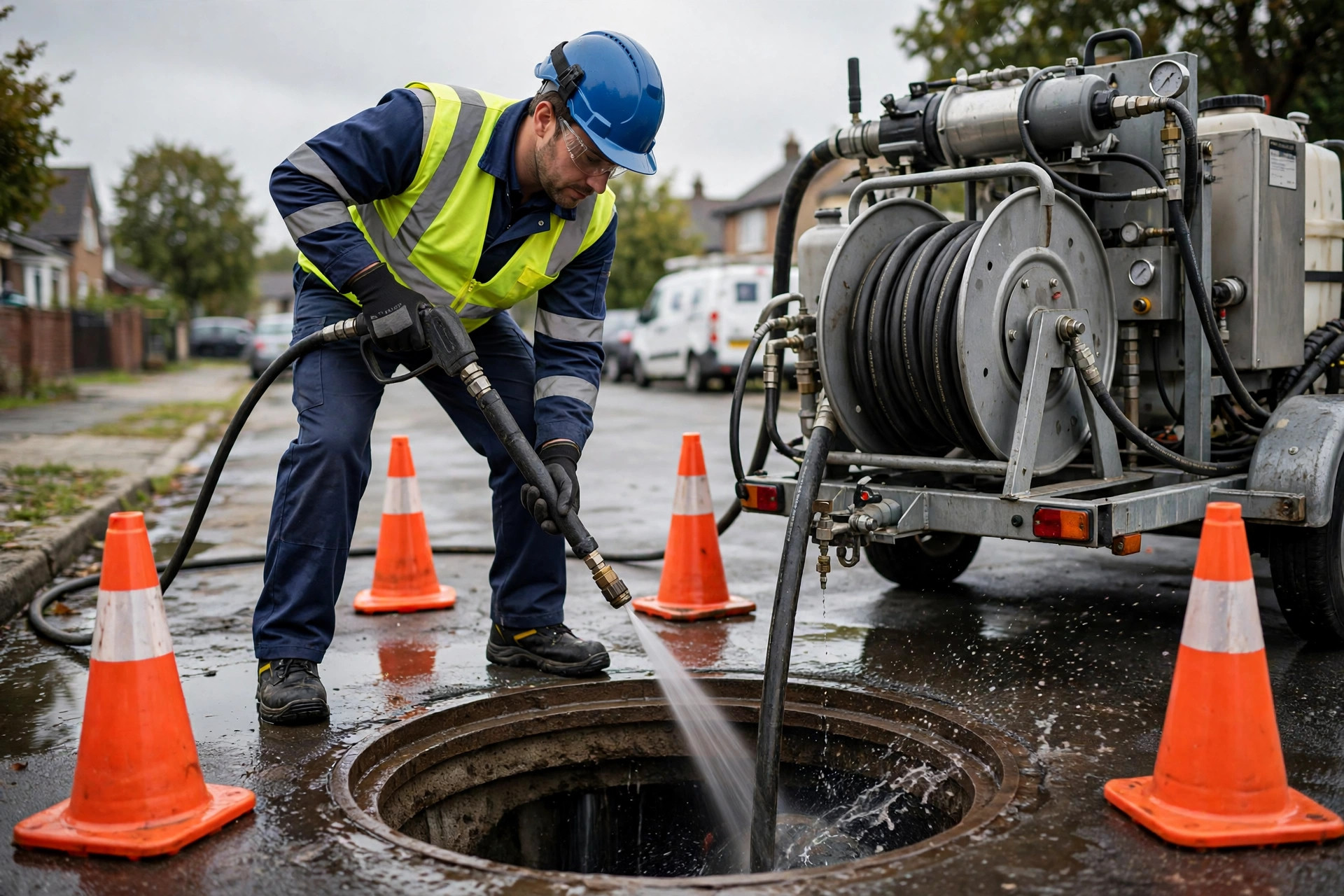
Hydro jetting sounds dramatic, and in a sense it is: a hose fitted with a specialised nozzle sends high-pressure water backwards and forwards inside a drain, scouring the full circumference of the pipe as it advances. In a Los Angeles home, where kitchen grease, hard-water scale and fine roots coat pipes from the inside, that scouring action can do something a cable cannot. A cable cuts a channel through a blockage; jetting cleans the wall, restoring more of the original bore and leaving a smoother surface that reclogs more slowly.
That power is also the reason jetting needs judgement. Los Angeles drains include sound modern pipe, grease-coated kitchen lines, root-invaded clay laterals, corroded cast iron and bellied sections that have lost their grade. Jetting is excellent for some of those conditions, helpful but incomplete for others, and wrong for a few. A homeowner who understands the difference can ask better questions, avoid paying for jetting that cannot fix a structural problem, and recognise when jetting is genuinely the best next step after a camera inspection.
This post explains how hydro jetting works in a home setting, which Los Angeles conditions it suits, how it is diagnosed and performed safely, how it compares with cable cleaning and repair, and how to maintain a jetted line in hard water, root-prone soil and winter rain.
How hydro jetting works in Los Angeles homes
A hydro jetting job starts at a cleanout, not at a fixture drain. The technician feeds a flexible high-pressure hose into the line, and the nozzle at its end has jets angled backward, which propel the hose forward, and jets angled forward or sideways, which cut and scour. As the hose advances, water at pressures far above household pressure breaks up grease, scale and fine roots and flushes debris downstream to the sewer. On the way back, the nozzle scours again, leaving the pipe wall cleaner than a cable pass would.
Pressure and flow are chosen for the pipe, not set to a maximum. A kitchen branch line, a main sewer lateral and a commercial-sized line all need different nozzles, pressures and water volumes, and an older clay or cast-iron pipe needs a more careful setting than a newer plastic line. The technician controls advance speed, watches for resistance that signals a root mass or an offset, and stops to reassess if the hose will not pass, because forcing a nozzle through a collapsed section or a severe offset risks damage. Water supply for the jetter usually comes from a hose bibb or a tank on the truck, and the work area is protected so that any backflow or debris is contained.
Jetting is usually paired with a camera, and the order matters. A camera before jetting shows the pipe material, the location of grease or roots, and any structural defect that would make jetting unsafe or pointless. A camera after jetting shows the cleaned wall, confirms that the full bore is restored, and records any crack, joint or belly that was hidden under buildup. In a Los Angeles home with an older lateral, that before-and-after footage is the difference between a cleaning service and a diagnosis, and it is what allows a homeowner to decide, with evidence, whether repair should follow.
Los Angeles causes and housing types suited to jetting
Kitchen lines are the clearest jetting candidates in Los Angeles. Years of cooking grease, food residue and detergent form a thick, sticky coating that narrows the pipe and catches new debris. A cable can open a channel through that coating, but the wall remains coated, so flow improves for weeks rather than months and the next clog forms on the same rough surface. Jetting scours that coating off, restoring a smoother wall and a larger bore, which is why a kitchen line that has been cabled three times in a year often stays clear much longer after one proper jetting, provided the pipe itself is sound.
Hard-water scale is the second classic jetting target. With hardness commonly at 200 to 400-plus parts per million, mineral scale builds inside drains as well as water heaters, particularly in traps, bends and older cast-iron lines with rough interiors. Scale narrows the bore and creates a surface that catches hair, soap and grease. Jetting can remove soft to moderate scale and flush it out, although very hard, thick scale in a severely corroded cast-iron pipe may need a different approach, because the pipe wall beneath the scale may already be thin. A camera check helps judge that balance before water pressure is applied.
Fine roots are a partial jetting target. Jetting cuts and flushes the fine root hairs that form a mat inside a clay lateral, restoring flow more completely than a cable that leaves root stubble behind. It does not, however, close the crack or joint that admitted the roots. Oak, sycamore and pepper roots will return through the same opening, so jetting a root-invaded lateral without a repair plan is maintenance, not a cure. That distinction should be explicit: jetting buys time and flow, while a spot repair, lining or replacement addresses the entry point.
Signs by room and area: when jetting is the likely answer
A kitchen that drains slowly despite repeated cable cleaning, or that clogs again within weeks of a cable visit, is a strong jetting signal. The pattern points to a wall coating rather than a single object: grease and scale remain after the cable channel closes, and the line reclogs from the same coating. A kitchen that gurgles when the dishwasher runs, or backs up into the other bowl of a double sink, may also benefit, provided a camera shows a coated but structurally sound line rather than a collapsed or bellied section.
Bathroom groups that share a branch and slow together, especially where hard-water scale is visible on fixtures, can also suit jetting. Soap, hair and scale together form a tenacious layer in tub and shower branches, and a cable may clear hair while leaving scale behind. Jetting scours that combined layer, but it should be used carefully in older cast-iron bathroom branches, where a camera should first confirm that the pipe wall can tolerate pressure. A single slow sink trap, by contrast, rarely needs jetting; a hand auger and trap cleaning are usually enough.
Main lines and laterals show jetting signals differently. A main line that backs up at the lowest drain, that gurgles across several fixtures, or that clogs with roots every year is a candidate for jetting followed by a camera, because jetting clears the root mat and grease more completely than a cable, and the camera then shows the joints that need repair. A lateral that only backs up in winter rain, however, may be taking in groundwater through cracks, and jetting alone will not stop that inflow. The rain pattern is a clue to look for structural or grade problems, not just buildup.
Diagnosis steps: camera first, jetting second, camera again
A responsible jetting job begins with questions and a fixture map, just like any drain diagnosis. Which fixtures are affected, how often the problem returns, whether rain matters, and what previous cleaning found all shape the plan. If a previous cable visit brought back roots, grease or scale, that history supports jetting. If a previous visit met a hard stop, a collapse, or a line that would not pass, that history argues for a camera before any high-pressure work, because the risk of worsening a structural defect is real.
The pre-jetting camera is the safety step. It records pipe material, diameter, joint condition, root entry points, bellies, offsets and cracks, and it measures distance from the cleanout so the technician knows where the nozzle is at each stage. In a clay lateral with a visible crack, the technician can decide to jet at a lower pressure, to jet only the sound sections, or to recommend repair first. In a cast-iron line with heavy corrosion, the camera may show thinning or holes that make jetting unsafe. Skipping this step in an older Los Angeles home trades a short saving for a larger risk.
During jetting, diagnosis continues through feel and observation. The hose should advance steadily through grease and fine roots, with debris flushing downstream. A sudden hard resistance, a hose that will not advance, or water backing up at a cleanout signals an obstruction, an offset or a collapse that needs reassessment, not more pressure. A technician will pull back, try a different nozzle or approach, or stop and camera the spot, rather than forcing the nozzle. That restraint is a mark of good practice, not hesitation.
The post-jetting camera and flow test close the loop. The camera should show a cleaner wall, a restored bore, and any structural defects now visible without buildup. Running multiple fixtures together, including a washing machine or dishwasher discharge, confirms that the line handles household volume. The final report should separate what jetting achieved, what structural issues remain, and what maintenance interval makes sense, so the homeowner is not left believing that a cleaned pipe is the same as a repaired pipe.
Jetting compared with cable cleaning and repair
Cable cleaning and jetting are complementary, not rivals. A cable is faster, uses less water, and is the right first tool for a local trap clog, a soft blockage close to a fixture, or a main-line blockage where a camera has already shown a sound pipe and the goal is simply to restore flow quickly. Jetting is slower, uses more water and equipment, and is the right tool when the problem is a wall coating, a long grease run, or a root mat that a cable only channels. Choosing between them on price alone misses the point: a cheap cable job that reclogs in a month is more expensive over a year than a jetting job that lasts.
Jetting versus repair is a different comparison. Jetting restores flow in a structurally sound pipe; repair restores the pipe itself. A spot repair fixes one cracked joint or short section, trenchless lining rehabilitates a longer run from the inside with less digging, and full replacement rebuilds a collapsed, badly bellied or extensively damaged lateral. Jetting can be a step before repair, by cleaning the pipe so a lining adheres properly or a camera can assess the full damage, and it can be a maintenance step after repair, by keeping a new or lined pipe clear. It cannot, by itself, fix grade, collapse or a broken joint.
There are situations where neither cable nor jetting is the answer and repair must come first. A collapsed section, a severe offset that blocks passage, a pipe that has lost its grade and holds water in a belly, or a lateral with multiple major cracks will not be cured by cleaning. In those cases, cleaning may temporarily restore a trickle, but the pipe will fail again quickly, and repeated cleaning wastes money and risks further damage. A camera report that shows those defects should lead to a repair conversation, with jetting discussed only as preparation or future maintenance.
What to check before calling for jetting
Before calling, establish whether jetting is even the right category. Note which fixtures are affected, how often the problem returns after cable cleaning, and whether grease, roots or scale have been mentioned in previous reports. A kitchen line cabled repeatedly is a different case from a toilet clogged by a foreign object, and a main line that backs up in rain is a different case from a slow shower trap. That history helps a technician bring the right equipment and decide whether a camera should precede jetting.
Check cleanout access and water supply without opening anything you are unsure about. Note where cleanouts are, whether they are accessible or buried under landscaping, and whether a hose bibb near the cleanout works, because the jetter needs water and access. Clear a path to the cleanout and to the lowest drain, and protect nearby flooring and stored items, because jetting can cause temporary backflow at a low drain if the line is heavily blocked. If sewage is currently backing up, stop using drains, keep the area clear, and say so when calling, because the order of work changes when sewage is present.
Ask questions when the technician arrives, before work starts. Ask whether a camera will be run before jetting, what pressure and nozzle are planned for your pipe material, what will happen if the nozzle meets a hard resistance, and whether a post-jetting camera and flow test are included. A clear answer to those questions, plus a plan for what happens if structural damage is found, is a good sign. A promise to jet at maximum pressure without a camera in an older clay or cast-iron lateral is a reason to pause and seek a second view.
Prevention and maintenance after jetting
After jetting, kitchen habits decide how long the clean wall stays clean. Keeping grease out of the sink, limiting food waste in the disposal, and running cold water during disposal use all slow the recoating process. In a hard-water home, that clean wall will still accumulate scale over time, so a maintenance interval, often annual for a heavily used kitchen line or a root-prone lateral, is more realistic than expecting a single jetting to last indefinitely. The post-jetting camera gives a baseline for that interval, because it shows how clean the pipe actually became.
Root maintenance after jetting needs a repair conversation, not just a calendar. If roots entered through a cracked joint, they will return, and the interval between jettings will shorten as the crack widens. Scheduling jetting without addressing the entry point is acceptable as a holding strategy while a repair is planned, but it should be named as such. A spot repair or lining at the entry joint, once the pipe is clean and the camera shows the exact location, breaks the cycle in a way that repeated jetting cannot.
Seasonal maintenance in Los Angeles should align with rain and tree growth. Jetting a root-prone or grease-prone main line before winter rain reduces the chance of a storm-night backup, when a partly blocked lateral also takes in groundwater. Checking cleanouts, area drains and gutters before the wet season, and addressing a slow drain in autumn rather than waiting for January, are simple steps that complement jetting. In hillside homes, checking pressure-reducing valves at the same visit is worthwhile, because high pressure above 80 PSI stresses supply lines even though it does not directly affect drains, and a combined visit saves a second call.
City-by-city notes across Los Angeles
In Pasadena and Glendale, jetting often meets the hardest combination: very hard water, older clay and cast-iron laterals, and mature trees. A jetting job here should almost always include a pre-camera, because scale, roots and corrosion coexist in the same run, and the camera decides whether jetting is safe and how much scale can realistically be removed. Glendale kitchen lines, in particular, benefit from jetting when grease and scale together have narrowed the pipe, but the same visit should check the supply side, where galvanized pipe from 1948 to 1965 may be narrowing in parallel.
Torrance slab homes present an access and evidence challenge for jetting. With pipes beneath concrete, a camera distance measured from an exterior cleanout is the map for both jetting and any future repair, and protecting interior floors during the job matters more than in a raised home. Jetting a Torrance main line that has been cabled repeatedly for roots is often worthwhile, but only if the post-jetting camera is used to locate the root entry joints precisely, so a later spot repair can target one section rather than disturbing a large slab area.
Long Beach and Santa Monica add shared lines and coastal groundwater. In multi-unit buildings, jetting must be coordinated so debris flushed from one unit does not lodge in a neighbour’s branch, and a building-wide camera view is more useful than a single-unit view. Coastal laterals that take in groundwater during winter rain may look clean after jetting but still back up in storms, which is a sign that the problem is inflow through cracks, not buildup, and that repair or lining should be discussed rather than another jetting cycle.
Frequently asked questions
Will hydro jetting damage my older Los Angeles pipes?
Jetting is safe for sound pipes when pressure and nozzle are matched to the pipe material, but it can worsen a collapsed or severely cracked section. That is why a camera inspection before jetting an older clay or cast-iron lateral is important, and why a technician should stop if the nozzle meets a hard resistance.
How is jetting different from snaking a drain?
Snaking cuts a channel through a blockage, while jetting scours the full pipe wall, removing grease, scale and fine roots and restoring more of the original bore. A cabled line often reclogs faster when the wall coating remains, which is why jetting lasts longer for grease and scale problems in a sound pipe.
Does jetting stop roots from coming back?
No. Jetting removes the root mat inside the pipe but does not close the crack or joint that let roots in. Roots from oak, sycamore or pepper trees will return through the same opening, so a lasting solution needs a repair at that joint, with jetting as maintenance in the meantime.
Related service
Call Los Angeles Plumbing Pros
If you are seeing the signs in this post, describe what you see, where it is, and when it started. A technician will talk through the next step before any work starts.